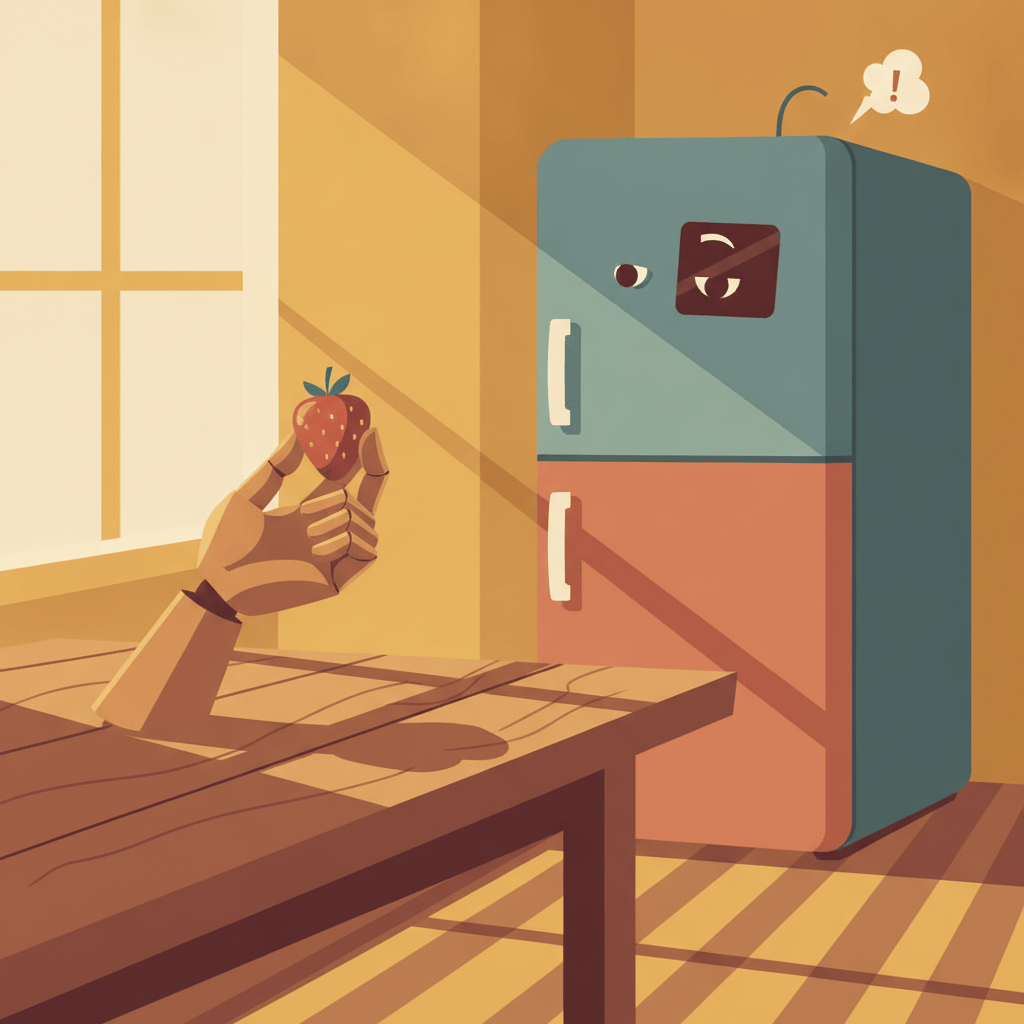
A man in Utah used his thoughts to pick up a strawberry without crushing it. A newsletter, meanwhile, wants you to believe your smart oven is plotting an uprising. Both of those sentences are technically about AI this week, and only one of them should keep you up at night. Between a genuine quantum-networking milestone, an open-source self-improvement method with an honest list of its own flaws, and OpenAI accidentally starring in its own corporate-espionage thriller, this was a week where the real progress was interesting enough on its own — it didn’t need the tsunami metaphors.
Worth Reading
- An AI-powered chip lets an amputee control his robotic arm with his mind — University of Utah researchers gave a patient a thought-controlled prosthetic that also restores a sense of touch, which is the kind of AI story that actually changes someone’s Tuesday, not just their stock portfolio.
- IonQ linked a trapped ion to a diamond memory chip 1,032 times a second — a genuinely boring-sounding lab result that quietly solves one of the hardest problems in connecting separate quantum computers into one big one.
- Sakana AI taught one model to solve, judge, and improve its own work — the refreshing part isn’t the benchmark gains, it’s that the researchers published their own method’s blind spot right alongside the win rate.
- OpenAI used its own models to help trace a hidden office recorder to an employee — buried inside a genuinely strange spy-novel story is a mundane but telling detail: the company’s AI tools did real forensic legwork, and did it well.
- Nicolas Cage refused to sign an AI waiver for Spider-Noir, and nothing happened to him — not a tech breakthrough, but a nice reminder that the consent protections actors fought for in 2023 are actually functioning as designed, letting someone say no and keep working elsewhere.
Spot the Hype
- Anthropic warns “AI worms” will infect your smart home devices — the actual experiment never got a model to fully self-replicate across real hardware, but sure, go ahead and picture your robot vacuum joining a botnet before dinner.
- IMF chief warns AI’s ‘slow-moving tsunami’ could leave Gen Z stuck pulling espresso shots — real labor economics dressed up in a natural-disaster metaphor so slow it’s basically just called “Tuesday,” now with bonus barista shade.
- Sam Altman says the world is going to have to suffer for the glories of AI — a nuanced policy comment about regulatory trade-offs, translated by a headline writer into something closer to a supervillain monologue.
What’s the most overcooked AI headline you ran into this week — fridge uprising or tsunami of baristas? Drop it in the comments, and if you missed it, catch last digest here.


Leave a Reply